It’s hard to believe the xDX Project is in the process of wrapping up. The progress we’ve made over the past three years has been substantial, and it feels fitting that this final blog post revisits some of the xDX Project’s achievements.
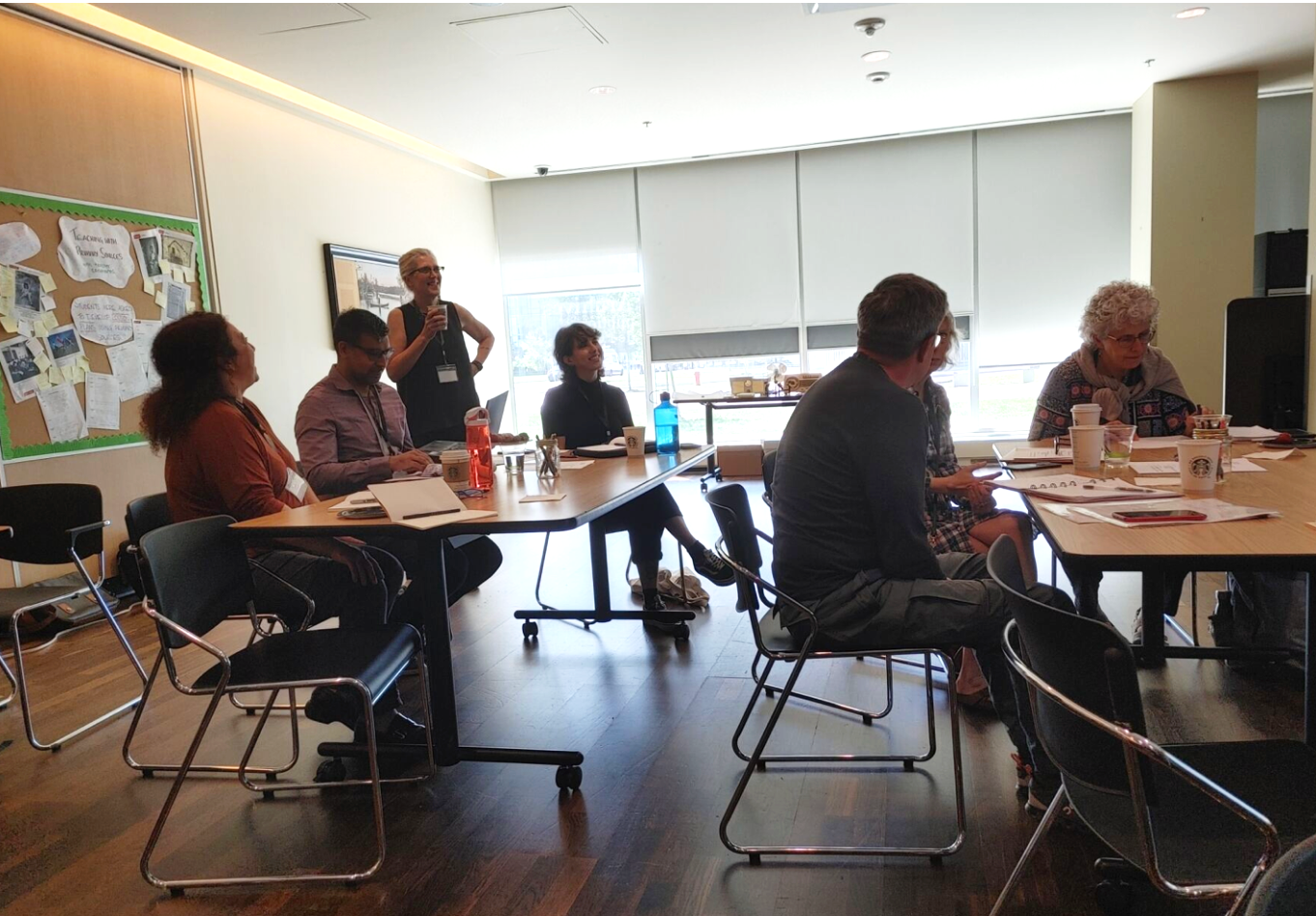
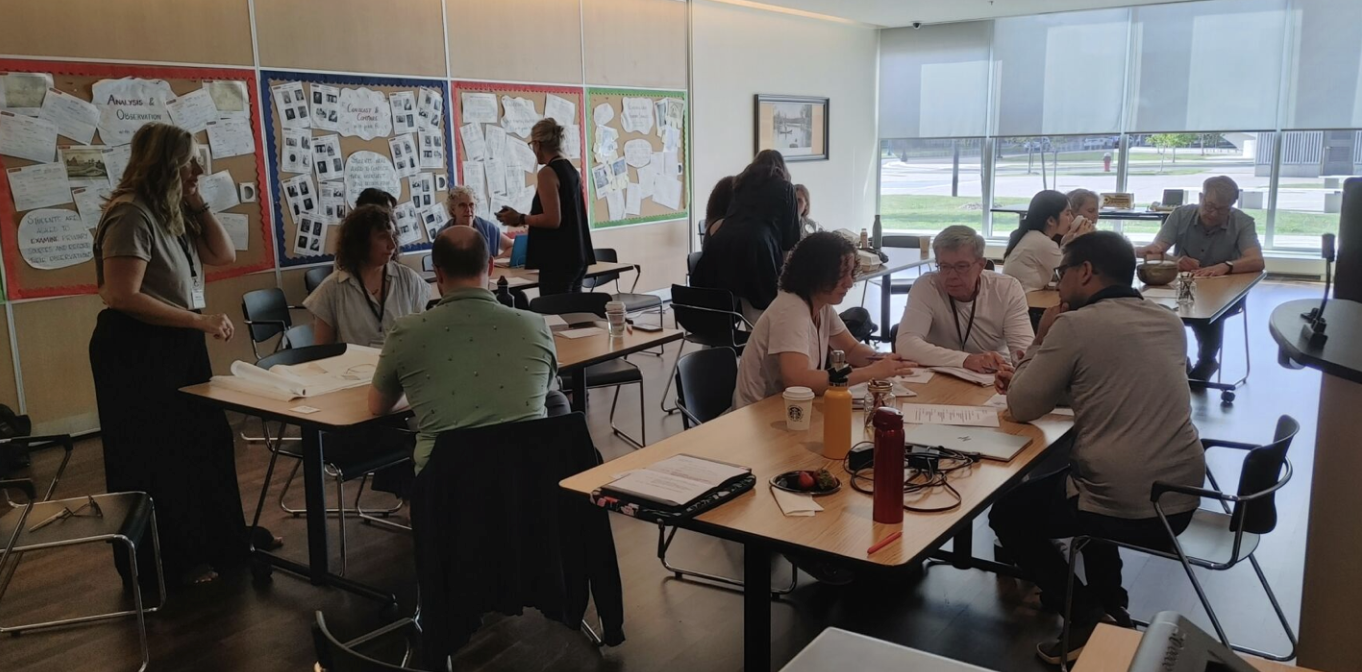
Thinking back to Workshop I in July 2023, I have a distinct memory of our infrastructure partners at LINCS and CHIN introducing the basics of the semantic web, Linked Open Data (LOD) and CIDOC-CRM. As we began discussing the parameters of our project, namely the reconstitution of the deaccessioned Design Exchange (DX) collection in a digital space, we were cautioned that the work ahead would be complex and time-consuming. Despite having no previous background in digital humanities, I left this two-day workshop feeling surprisingly unphased. In retrospect, that confidence was somewhat naïve.
However, when reconsidering these initial meetings, particularly from a vantage point of the fully realized xDX ResearchSpace, it’s clear that the growing pains and steep learning curves were worthwhile. Yes, the hours that our team spent are almost innumerable –– studying the physical artefacts and pouring over DX’s archival records and legacy data sets alongside the institutional data sets shared by our partners at the Canadian Museum of History (CMH), Royal Ontario Museum (ROM) and Archives of Ontario (AO) –– but the outcomes of our efforts have not befallen a similar fate. They’re quantifiable.
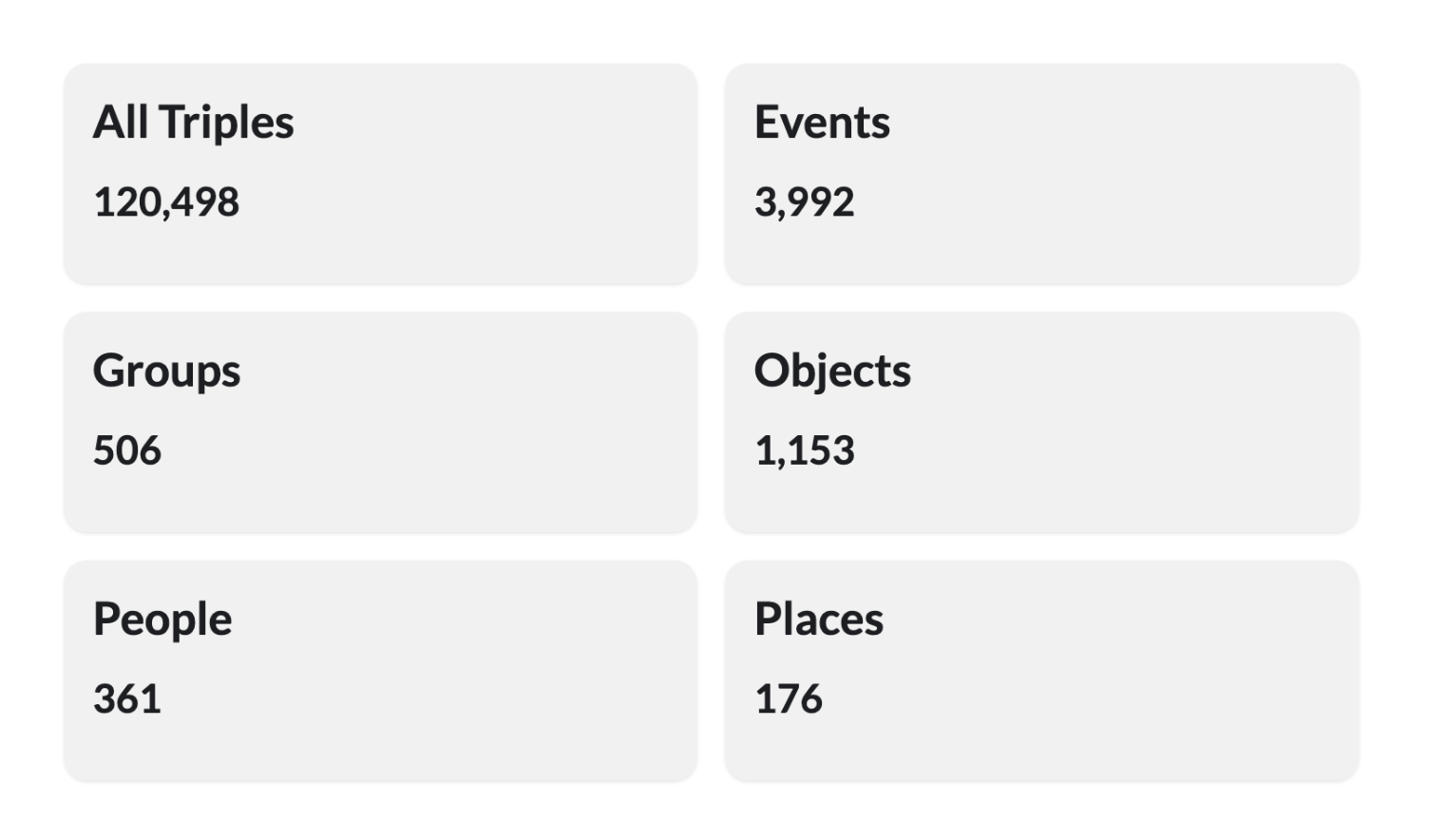
Beyond accomplishing our primary goal of creating a platform agnostic dataset that represents the entirety of former DX holdings, this work has contributed to the preservation of Canada’s unique design history in several interrelated ways. Aside from simply (ha!) cleaning and reconciling data related to more than 700 artefacts and 1100 archival files –– which is a pre-requisite for machine-readability –– our team processed, created, and enriched the legacy data we inherited.
Michael Moir, then Head Archivist at Clara Thomas Archives and Special Collections, and Jan Hadlaw, xDX Project PI, organized and processed the Fred & Glenn Moffatt records in Fall 2024 in preparation for the accession of the Fonds to CTASC. Matthew Alexander, the 2024 xDX Public History placement student, and I assisted in preparing the data to uploaded to AtoM, CTASC’s collection management software. Dhatri Gunupudi CU research assistant, developed a finding aid for the DX archival materials held at the Canadian Museum of History with guidance from curator Joanne Stober and CMH archivists. In addition, our team of research assistants, as a whole, continuously worked towards correcting data for mislabeled objects, at times reuniting artefact components that had been separated in the deaccessioning process. As a result, the xDX dataset is more comprehensively documented and securely safeguarded, enhancing the visibility of xDX objects and archival materials within the broader historical record.
These efforts have also played a pivotal role in strengthening the representation of Canadian designers, firms and manufacturers. As our team worked to reconcile designers, contributors, manufacturer and other stakeholders that appeared in our dataset, it quickly became apparent that Canadian entities –– people, groups, companies, institutions –– were underrepresented in most authoritative controlled vocabulary repositories: VIAF (Virtual International Authority File), LOC (Library of Congress), as well as those associated with the Getty Research Institute. As a result, we worked with our partner LINCS to mint almost 400 new Uniform Resource Identifiers (URIs). These new URIs create the conditions for persistent (and consistent) identification of culturally significant Canadian individuals, institutions, and companies, promoting their discoverability for further research.
Rosalind Sweeney McCabe and I also developed bespoke archival and conceptual mapping to better navigate the idiosyncrasies of design collections. Based on our early discussions with Philippe Michon (CHIN), we worked with our infrastructure partners at LINCS to reconfigure the xDX data modelling to meet the project’s needs. Drawing inspiration from CIDOC-CRM’s “conceptual object”, the xDX ResearchSpace is now able to trace the relationships between series, prototypes and archival records (that include technical drawings, sketches and marketing materials) within the intersecting networks of stakeholders who were involved in these processes.
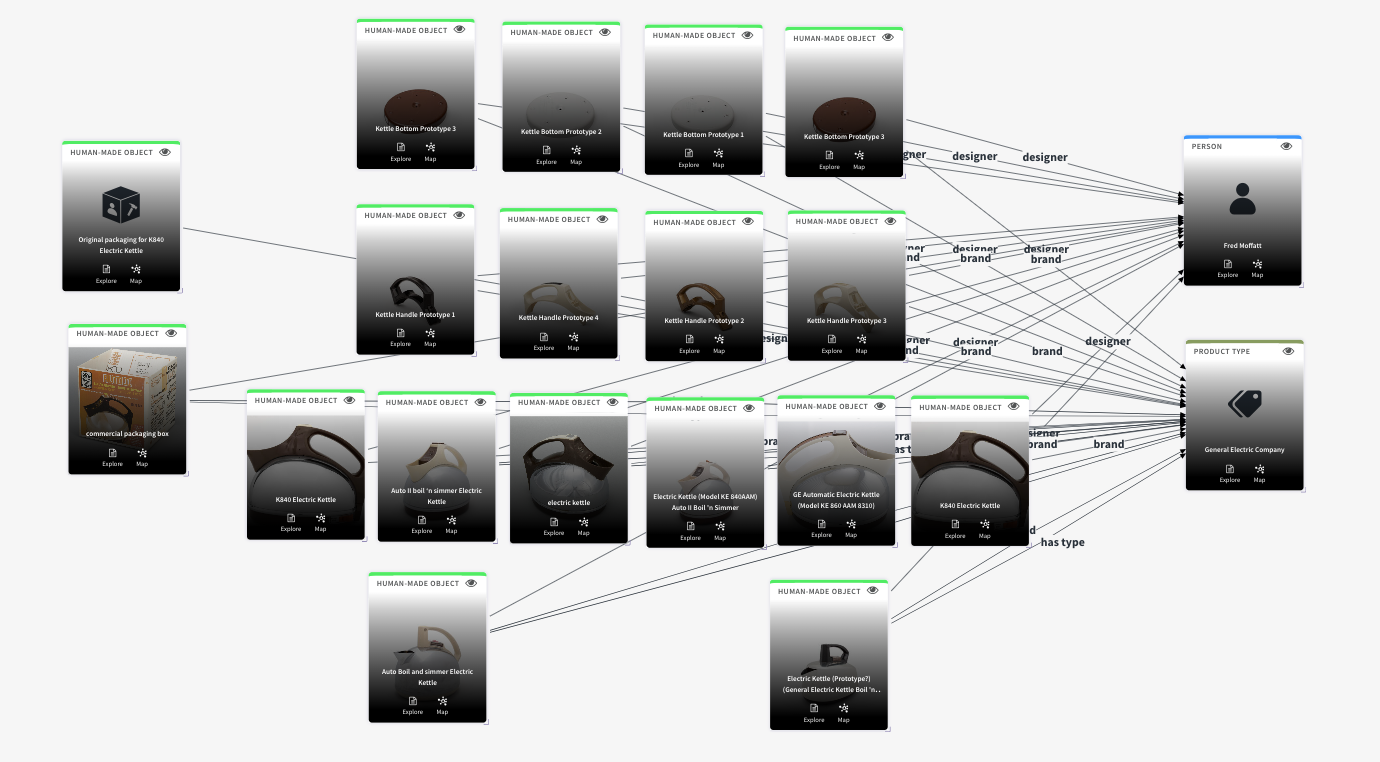
To illustrate these accomplishments more concretely, I have generated a Knowledge Map that follows the transformation of Fred Moffatt’s Boil ‘n Simmer Series. Beginning by faceting for “Boil ‘n Simmer” in the xDX artefacts filter –– the front-end manifestation of our reconfigured “conceptual object” work in the dataset –– I was able to bring up all of the objects that are connected to this label, including multiple models of kettles, packaging, and various prototypes. While this is useful in terms of visualizing the shifts in the physical objects over time, the knowledge map provides little insight to how, where and by whom these objects were produced and designed. Though the summary pages of some of these objects clearly state that this series of kettles was designed by Fred Moffatt and manufactured by Canadian General Electric, more information can be uncovered by incorporating the archival holdings.
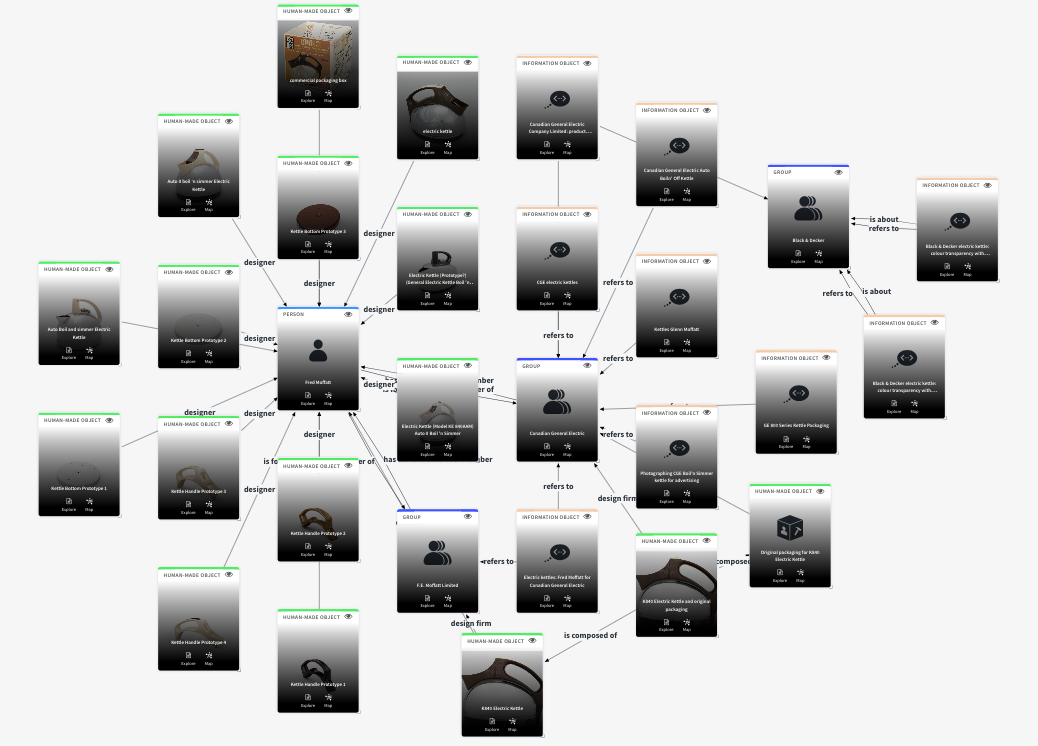
Indeed, and as shown above, the inclusion of manufacturers as well as the archival records that refer to the Boil ‘n Simmer Series reveals a new, unexpected connection to Black & Decker. However, the nature of this relationship is undefined, as no additional contextual information is provided on the summary page. While this dead-end may be viewed as a shortcoming to some, this ambiguity was built into the xDX dataset by design. This is because the xDX ResearchSpace is not meant to circumvent the need for hands-on research. Rather, we hope it serves as a useful resource for researchers to begin their investigations into the history of Canadian design. The goal is to generate interest and further inquiry, to foster engagement with primary sources held by our institutional partners, the current caretakers of the former DX Collection artefacts.
Nevertheless, even though this is our last blog post and we have been able to meet the goals we set out to achieve with the xDX Project, this does not necessarily mean that our work has come to an end. Like many other digital humanities projects, we acknowledge that further research, data entry, modelling, and reconfiguration could continue to expand the scope and possibilities of our dataset. In this sense, the xDX Project reflects a methodological overlap between design and digital humanities. Both disciplines are shaped by iterative processes, testing, prototyping, revising and refining systems over time. Just as design practice often involves cycles of experimentation and improvement, our platform agnostic dataset is built to remain flexible and open to future development.
Ultimately, the xDX dataset, ResearchSpace, and the Project as a whole, should not be thought of finished products, but as evolving research tools that can support ongoing experimentation, interpretation, and collaboration across disciplines. Members of our team will continue working with both the xDX ResearchSpace and the xDX dataset more broadly, with the goal of deepening critical and scholarly understandings of Canadian design heritage. While we may not be reporting on these activities on this website or our social media channels, we invite you to keep an eye out for future work emerging from the project — whether it is in ResearchSpace itself, conference presentations, or forthcoming publications.
Aviva Weizman, Lead RA, York University

